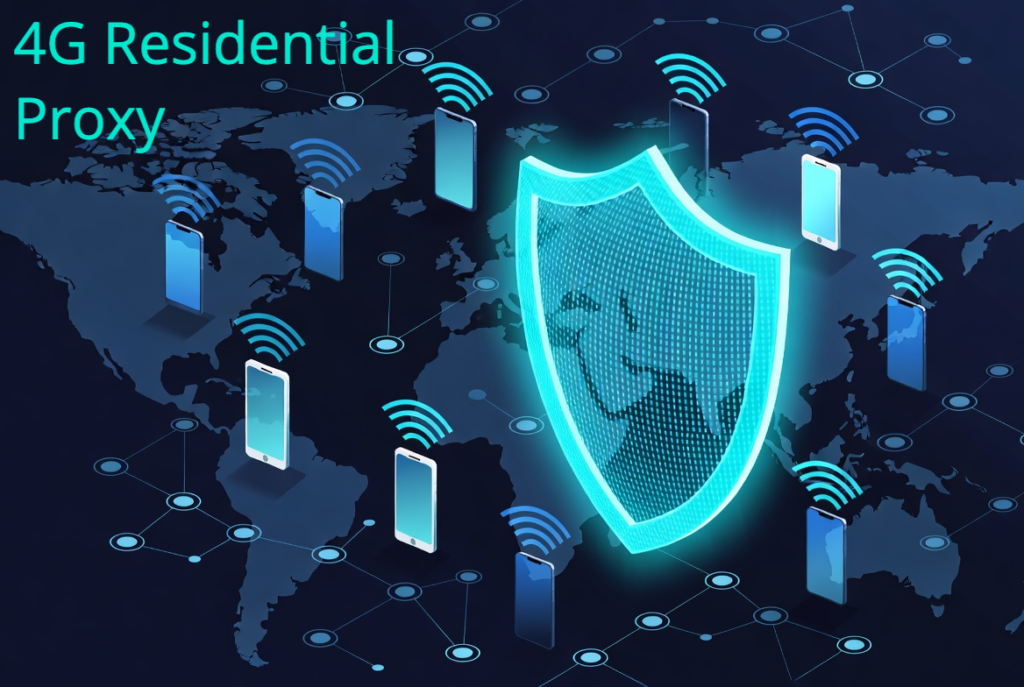
4G Residential Proxy
Get the best 4G residential proxy for sale. Real 4G mobile carrier IPs with high success rates, stable speeds and advanced geo-targeting. Buy 4G residential proxies perfect for social media management, scraping and ad verification. Fast setup and reliable performance guaranteed.
Success Rates Comparison on Protected Platforms (2026)
| Platform | 4G Residential Proxy Success Rate | Traditional Residential | Datacenter Proxies |
|---|---|---|---|
| 95–99% | 60–75% | 30–50% | |
| TikTok | 92–98% | 55–70% | <40% |
| Amazon & Major E-commerce | 94–98% | 70–85% | 40–60% |
| Cloudflare-Protected Sites | 88–95% | 45–65% | 20–45% |
| Sneaker & Limited Drop Sites | 85–94% | 35–50% | <30% |
These results show why thousands of professionals choose to buy 4G residential proxy services when maximum reliability is required.
What Is a 4G Residential Proxy?
A 4G residential proxy is a premium mobile proxy that uses IP addresses provided by real mobile carriers on 4G LTE networks. Traffic passes through actual SIM cards and mobile modems, so target websites see authentic cellular connections instead of data center or home broadband IPs.
Thanks to Carrier Grade NAT (CGNAT), one public IP is often shared by hundreds or thousands of real mobile users. This natural blending makes 4G residential proxy connections extremely difficult to detect or block.
Main features include:
- Automatic and natural IP rotation
- Realistic mobile device fingerprints
- Precise geo-targeting by country, city, or carrier
- Full support for HTTP/S and SOCKS5 protocols
How Does a 4G Residential Proxy Work?
When you send a request through a 4G residential proxy, it first goes through a real 4G-connected device or modem pool. The target website receives the request from a legitimate mobile carrier IP with typical mobile connection characteristics — speed fluctuations, headers, and behavior patterns that match real smartphone users.
This architecture delivers two major advantages:
- Organic IP rotation triggered by network handoffs and CGNAT
- Strong resistance to behavioral analysis and device fingerprinting
As a result, 4G residential proxy solutions consistently show the best performance on platforms with advanced anti-bot protection.
Key Benefits
Here’s why a 4G residential proxy is often the best choice in 2026:
- Extremely high success rates (88–99% on strict platforms)
- Natural IP rotation that reduces ban risks without manual settings
- Authentic mobile user mimicry
- Superior anonymity and blending with real mobile traffic
- Stable speeds of 20–80 Mbps suitable for most automation tasks
- Significantly fewer CAPTCHAs and account blocks
Users who buy 4G residential proxy services regularly report 2–3 times better results and higher ROI compared to cheaper proxy types.
4G vs 5G Mobile Proxy
| Feature | 4G Residential Proxy | 5G Mobile Proxy |
|---|---|---|
| Global Coverage | Excellent and mature | Growing but still limited in many areas |
| Average Speed | 20–80 Mbps (very stable) | 50–300+ Mbps (more variable) |
| Price per GB | More affordable | 20–50% more expensive |
| Best For | Social media, scraping, account management | High-bandwidth tasks, video streaming |
| Reliability in 2026 | Highly predictable | Good but still maturing |
For most users, a 4G residential proxy continues to offer the optimal balance between performance, cost, and availability.
4G vs Other Proxy Types
| Feature | 4G Residential Proxy | Traditional Residential Proxy | Datacenter Proxy |
|---|---|---|---|
| IP Source | Real 4G mobile carriers | Home ISP broadband | Cloud servers |
| Success Rate on Strict Sites | 88–99% | 55–85% | 25–60% |
| Detection Risk | Very low | Medium | High |
| Rotation | Natural & dynamic | Configurable | Fast but obvious |
| Mobile Mimicry | Native | Limited | None |
| Typical Speed | 20–80 Mbps | 30–150 Mbps | 100–1000+ Mbps |
| Cost Level | Higher | Medium | Lowest |
Popular Use Cases
- Social media automation and multi-account management (Instagram, TikTok, Facebook, X)
- Advanced web scraping on protected e-commerce and search engine sites
- Ad verification and mobile ad placement monitoring
- Sneaker copping and limited-release shopping automation
- Bulk account creation and long-term account farming
- Mobile SEO monitoring and geo-specific market research
- Price tracking and competitive intelligence
How to Choose and Buy 4G Residential Proxy – Buyer’s Guide
When you are ready to buy 4G residential proxy, consider these important factors:
- Size and diversity of the mobile IP pool
- Flexible rotation options and sticky session support (10 minutes to several hours)
- Geo-targeting precision (country, city, carrier)
- Protocol support (HTTP/S + SOCKS5) and API integration
- Uptime guarantee (ideally 99.9%+)
- Pricing model: pay-per-GB or dedicated ports
- Additional tools: usage analytics, IP whitelisting, session control
Average Pricing in 2026:
- Pay-per-GB: $5 – $12 per GB (lower rates for larger volumes)
- Dedicated ports: $30 – $150 per port/month depending on features and location
Practical Setup Tips
- Prefer SOCKS5 protocol for maximum compatibility
- Use sticky sessions for login and account-related tasks
- Switch to rotating mode for large-scale scraping
- Combine with browser fingerprint spoofing tools
- Test small volumes first on your target platforms
FAQ – Frequently Asked Questions
What makes a 4G residential proxy better than regular residential proxies? It uses real mobile carrier IPs with CGNAT, providing much better blending and higher success rates on strict platforms.
Can I use 4G residential proxy for long sessions? Yes. Quality providers support sticky sessions from 10 minutes up to 24 hours, perfect for account management.
How fast is a 4G residential proxy? Realistic speeds range from 20 to 80 Mbps — stable and sufficient for automation, scraping, and multi-account work.
Is it legal to use 4G residential proxy? Yes, when used for legitimate purposes such as data collection, automation, and market research while following platform rules.